

In an exclusive interview with Wire & Cable India, Mr. Abhishek Rathi, Founder & Director, Taprath Elastomers LLP, shares that the company is witnessing increasing adoption of HFFR/LSZH compounds, electron beam crosslinkable (EBXL) compounds, and functional additive masterbatches, driven by the growing need for enhanced safety, reliability, and compliance with stringent global standards. Solar and EV cables continue to be among the fastest-growing segments for these advanced compounds. He adds that the next phase of growth will be driven by higher-performance HFFR/LSZH compounds, advanced XLPO technologies, sustainable material solutions, and smart additive systems. Taprath will continue to invest in indigenous R&D, customer-centric formulation development, and advanced testing capabilities to support the next generation of specialty cable materials.
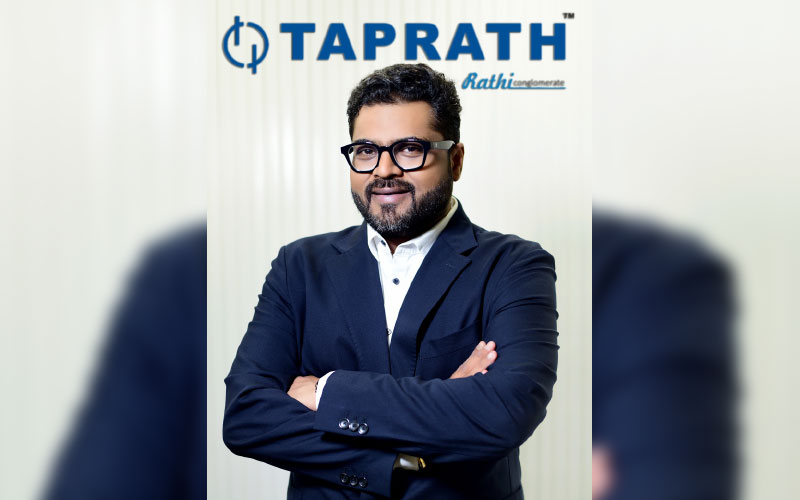
Wire & Cable India: Which specialty cable applications are presently generating the strongest demand for advanced compounds, additives, masterbatches, and specialty material systems?
Abhishek Rathi: At Taprath, we are witnessing robust demand from high-growth sectors such as renewable energy (particularly solar), electric vehicles (EVs), railway and metro infrastructure, industrial automation, data centres, defence, marine, and building safety applications. These sectors demand materials that offer superior thermal, mechanical, and fire performance while ensuring long service life under challenging operating conditions.
The increasing adoption of HFFR/LSZH compounds, electron beam crosslinkable (EBXL) compounds, and functional additive masterbatches is driven by the need for enhanced safety, reliability, and compliance with stringent global standards. Solar and EV cables, in particular, continue to be among the fastest-growing segments.
Watch: Top Cable Companies in India
WCI: What major changes are you observing in cable manufacturers’ material requirements in areas such as flame performance, flexibility, thermal endurance, UV stability, chemical resistance, and long-term reliability?
AR: The industry has clearly shifted from cost-driven material selection to performance-driven engineering. Cable manufacturers now seek compounds that simultaneously deliver excellent flame retardancy, low smoke and zero halogen emissions, higher operating temperatures, superior flexibility, outstanding UV and weather resistance, improved chemical resistance, and extended service life.
There is also increasing demand for materials capable of meeting multiple international standards within a single formulation. Manufacturers expect compounds that offer consistent processing characteristics while delivering reliable long-term performance across diverse environmental conditions.
WCI: How are automation, robotics, renewable energy, EV infrastructure, and other high-performance applications influencing compound development and formulation strategies?
AR: These emerging sectors are significantly raising performance expectations. Automation and robotics require highly flexible cables capable of withstanding continuous movement and repetitive bending. Renewable energy applications demand exceptional UV, ozone, moisture, and thermal ageing resistance for decades of outdoor service. EV infrastructure requires compounds capable of handling elevated temperatures, higher current loads, chemical exposure, and demanding mechanical environments.
As a result, formulation strategies are increasingly focused on multifunctional performance, balancing mechanical properties, electrical performance, processability, and long-term durability without compromising manufacturing efficiency.

The industry has clearly shifted from cost-driven material selection to performance-driven engineering. Cable manufacturers now seek compounds that simultaneously deliver excellent flame retardancy, low smoke and zero halogen emissions, higher operating temperatures, superior flexibility, outstanding UV and weather resistance, improved chemical resistance, and extended service life.
WCI: What technical challenges arise while balancing performance, processability, compliance requirements, durability, and commercial viability within specialty cable compounds?
AR: One of the biggest challenges is achieving multiple performance objectives within a commercially viable formulation. Enhancing flame retardancy, mechanical strength, weather resistance, and electrical properties often impacts processability or increases formulation costs.
Additionally, compliance with increasingly stringent international standards requires extensive formulation optimization, rigorous testing, and careful raw material selection. Maintaining batch-to-batch consistency while ensuring efficient processing across different extrusion lines remains a critical area of focus. Successful compound development therefore requires strong formulation expertise combined with close collaboration between material suppliers and cable manufacturers.
WCI: How has demand evolved for HFFR/LSZH, XLPO, silicone, elastomeric, and other advanced material systems across specialty cable applications?
AR: The demand for HFFR/LSZH compounds has grown rapidly due to increasing emphasis on fire safety across buildings, transportation, public infrastructure, and industrial installations. XLPO compounds continue to see strong growth in solar, railway, automotive, and industrial applications where higher operating temperatures and improved electrical performance are required.
Silicone and elastomeric compounds remain important for highly specialized applications involving extreme temperatures or exceptional flexibility. Overall, the market is steadily transitioning toward higher-performance engineered materials capable of meeting evolving global safety and reliability requirements.
WCI: To what extent does the Indian specialty cable material ecosystem still depend on imported polymers, additives, stabilizers, or formulation technologies, and where do you see localization opportunities emerging?
AR: While India has developed strong compound manufacturing capabilities, the industry continues to rely on imported specialty polymers, performance additives, stabilizers, and certain advanced formulation technologies.
However, the localization opportunity is significant. Under the Make-in-India initiative, increasing domestic R&D, stronger collaboration between polymer manufacturers and compounders, and investment in specialty additives can substantially reduce import dependence. At Taprath, we believe indigenous formulation development and application engineering will play an increasingly important role in strengthening India’s self-reliance in specialty cable materials.
Also Read: KK Kompounding: The Next Evolution in Medium Voltage Cables: Why K-Prene HTPE Matters Now
WCI: How important have testing, certification, consistency control, and application-specific customization become in today’s specialty cable material environment?
AR: These factors have become fundamental rather than optional. Customers today expect compounds that consistently meet demanding international standards while delivering repeatable processing performance and long-term field reliability.
Extensive testing, strict quality control, and application-specific customization enable material suppliers to address unique customer requirements across diverse cable applications. At Taprath, we place strong emphasis on product validation, consistency, and close technical support to ensure our compounds perform reliably throughout the cable’s service life.
WCI: Looking ahead, which material technologies, compound systems, or performance requirements do you believe will shape the next phase of development within the specialty cable segment?
AR: The next phase of growth will be driven by higher-performance HFFR/LSZH compounds, advanced XLPO technologies, sustainable material solutions, and smart additive systems that enhance durability and processing efficiency.
Future compound development will increasingly focus on higher thermal ratings, improved fire performance, lower environmental impact, enhanced recyclability where feasible, and longer service life. As industries continue to electrify and infrastructure becomes more demanding, innovation will increasingly centre on delivering safer, more reliable, and application-specific material systems that comply with evolving global standards while remaining commercially competitive.
From Taprath’s perspective, continued investment in indigenous R&D, customer-centric formulation development, and advanced testing capabilities will be key to supporting this next generation of specialty cable materials.
Maintaining batch-to-batch consistency while ensuring efficient processing across different extrusion lines remains a critical area of focus. Successful compound development therefore requires strong formulation expertise combined with close collaboration between material suppliers and cable manufacturers.