

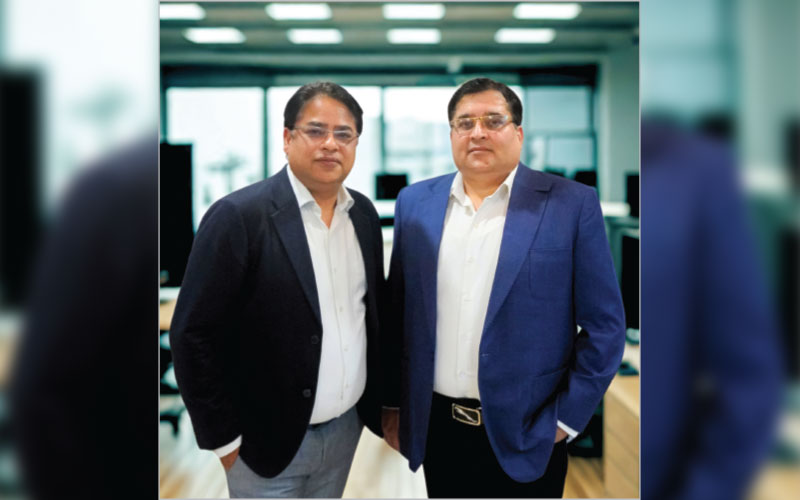
In an exclusive interview with Wire & Cable India, Mr. Amit Takkar, Director, Takkar Polychem Pvt. Ltd., shares that automation, robotics, renewable energy, EV infrastructure and other high-performance sectors are changing the way cable compounds are developed. With over three decades of experience in cable compounds and masterbatches, Takkar Polychem works closely with cable manufacturers across India to develop application-specific material solutions. The company is developing E-Beam and silicone-based masterbatches, and advanced compounds such as LSZH, FRLS, and ZHFR with improved flame performance, processing stability, UV resistance, flexibility, consistency and long-term reliability for high-performance wires and cables.
Wire & Cable India: Which specialty cable applications are presently generating the strongest demand for advanced compounds, additives, masterbatches, and specialty material systems?
Amit Takkar: The strongest demand is coming from applications where fire safety, durability, thermal performance, flexibility and protection from external damage are important.
We are seeing strong demand from building wires, FRLS house wiring cables, LSZH cables, lift and elevator cables, telecom and signalling cables, control cables, solar DC cables, automotive cables, E-Beam crosslinked cables, industrial flexible cables, and cables used in public infrastructure.
For these applications, customers are asking for LSZH compounds, FRLS PVC compounds, ZHFR and E-Beam ZHFR compounds, E-Beam masterbatches, UV stabilizer masterbatches, anti-rodent and anti-termite masterbatches, rubberised PVC/NBR PVC compounds, silicone-based additive masterbatches, black PE masterbatches and high-performance colour masterbatches.
At Takkar Polychem Pvt. Ltd. (TPPL), our LSZH compounds are engineered for building wires, lift and elevator cables, telecom, signalling and control cables, and cable applications used in commercial buildings, public infrastructure and high-occupancy spaces. Our FRLS PVC compounds are used for house wiring, infrastructure wiring, control cables, high-rise buildings, tunnels, substations and data centers. We are also seeing increased demand for UV masterbatches for outdoor PVC, PE and EVA cable applications, especially solar and outdoor wires.
Anti-rodent and anti-termite masterbatches are gaining importance in cables exposed to field, warehouse, rural and infrastructure environments. Rubberised PVC/NBR PVC compounds are preferred where flexibility, oil resistance, cold bend performance and rubber-like feel are required. For high-temperature and crosslinked cable applications, E-Beam compounds, E-Beam masterbatches and silicone-based additive masterbatches are becoming more relevant.
Watch: Top Cable Companies in India
WCI: What major changes are you observing in cable manufacturers’ material requirements in areas such as flame performance, flexibility, thermal endurance, UV stability, chemical resistance, and long-term reliability?
AT: Cable manufacturers are no longer looking only at basic PVC compounds. They now want compounds that solve real field problems.
In fire-sensitive applications, customers want low smoke, controlled flame propagation and safer evacuation. LSZH compounds are preferred where human safety, visibility during fire and corrosion prevention are important. FRLS PVC compounds are expected to reduce smoke emission, control flame propagation and provide stable extrusion performance.
For outdoor cables, customers now ask for UV resistance, weather stability, colour retention and long-term surface protection. TPPL UVC-12903 is developed for PVC applications requiring UV stability, while UVE-12909 is developed for PE, EVA and flexible polymer applications exposed to sunlight.
For flexible and oil-resistant cables, demand is growing for rubberised PVC/NBR PVC compounds because they offer better flexibility, oil resistance, cold bend performance and a rubber-like feel compared to standard PVC.
WCI: How are automation, robotics, renewable energy, EV infrastructure, and other high-performance applications influencing compound development and formulation strategies?
AT: Automation, robotics, renewable energy, EV infrastructure and other high-performance sectors are changing the way cable compounds are developed. These applications need cable materials that can handle heat, movement, electrical load, outdoor exposure, vibration and tight installation conditions.
For renewable energy and solar cable applications, E-Beam compatible ZHFR compounds are becoming more relevant. TPPL offers ZHFR-9018 (EB-I) for insulation and ZHFR-9033 (EB-S) for sheathing applications. These grades are developed for E-Beam crosslinked wire and cable applications and are suitable for evaluation in solar cables, power and control cables, industrial automation cables, and railway signalling/communication cables. They are designed to support halogen-free flame-retardant behavior, low-smoke performance, stable processing, thermal ageing and outdoor cable requirements, subject to suitable cable design and processing conditions.
For automotive and EV-related wiring, materials must withstand heat, vibration, oil exposure, tight installation spaces and long-term electrical performance requirements. TPPL’s T2/T3 automotive PVC compounds and masterbatches are developed for thermal ageing, colour stability, mechanical integrity and electrical compatibility, with T2 for cabin/interior harnesses and T3 for engine compartment and under-bonnet wiring.
E-Beam technology is also influencing formulation development because it can help improve thermal, mechanical and dimensional performance without depending on chemical curing agents. Overall, these applications are pushing compound manufacturers to develop materials with better flame performance, processing stability, UV resistance, flexibility, consistency and long-term reliability.
E-Beam technology is influencing formulation development because it can help improve thermal, mechanical and dimensional performance without depending on chemical curing agents. Overall, these applications are pushing compound manufacturers to develop materials with better flame performance, processing stability, UV resistance, flexibility, consistency and long-term reliability.
WCI: What technical challenges arise while balancing performance, processability, compliance requirements, durability, and commercial viability within specialty cable compounds?
AT: The biggest challenge is balance. If we increase flame retardant loading, flame performance may improve, but flexibility, elongation, surface finish and extrusion speed can get affected. If we focus too much on cost, long-term ageing, consistency or field performance may suffer.
Specialty compounds must pass technical requirements and also run smoothly on the customer’s extrusion line. A compound is not successful only because it passes a lab test. It should also give stable processing, less plate-out, good surface finish, low rejection and consistent batch-to-batch performance.
For example, LSZH compounds must provide low smoke, zero halogen performance and smooth extrusion behaviour. Rubberised PVC must provide flexibility and oil resistance while remaining cost-effective and easy to process. FRLS compounds must balance low smoke, flame performance, thermal stability and stable extrusion.
WCI: How has demand evolved for HFFR/LSZH, XLPO, silicone, elastomeric, and other advanced material systems across specialty cable applications?
AT: Demand for HFFR/LSZH and ZHFR compounds has increased because cable manufacturers are focusing more on fire safety, low smoke, zero-halogen performance and safer evacuation in buildings, infrastructure, public spaces, solar projects and export markets. LSZH materials are preferred where smoke reduction, non-corrosive gas behaviour and protection of people, equipment and infrastructure are important.
E-Beam and crosslinked cable materials are also growing in solar, automotive, industrial and high-temperature applications. TPPL offers ZHFR-9018 (EB-I) for insulation and ZHFR-9033 (EB-S) for sheathing applications. These grades are suitable for evaluation in E-Beam crosslinked cable applications where heat resistance, flame performance, ageing stability and outdoor durability are required, subject to suitable cable design and E-Beam processing.
Silicone-based additive masterbatches are also gaining demand in specialty cable compounds. TPPL’s silicone masterbatches are developed for E-Beam, TPE and TPU-based compounds. They help improve lubrication, processability, abrasion resistance, anti-scratch properties and uniform dispersion, which are important in high-speed and demanding cable applications.
Elastomeric and rubberised systems are growing where flexibility, oil resistance, vibration absorption, cold bend performance and rubber-like feel are required. TPPL’s rubberised PVC/NBR PVC compounds are used in flexible cables, pump cables, automotive wire applications, battery cables, industrial flexible cables, and insulation/sheathing applications where standard PVC may be too stiff and rubber may be too costly.
WCI: To what extent does the Indian specialty cable material ecosystem still depend on imported polymers, additives, stabilizers, or formulation technologies, and where do you see localization opportunities emerging?
AT: India has made significant progress in PVC compounds, FRLS compounds, LSZH compounds, masterbatches and many customized cable material systems. However, some specialty additives, high-performance stabilizers, crosslinking systems, UV packages and advanced formulation technologies still have import dependence.
The opportunity for localization is strong in UV stabilizer masterbatches, anti-rodent and anti-termite systems, E-Beam masterbatches, silicone additive masterbatches, high-performance colour masterbatches, FRLS/LSZH compounds and rubberised PVC/NBR PVC compounds.
Indian cable manufacturers need suppliers who can provide not just material, but also technical support, customized grades, trial support, documentation and consistent batch quality. This is where Indian compound manufacturers can become stronger and reduce import dependence.
Specialty compounds must pass technical requirements and also run smoothly on the customer’s extrusion line. A compound is not successful only because it passes a lab test. It should also give stable processing, less plate-out, good surface finish, low rejection and consistent batch-to-batch performance.
WCI: How important have testing, certification, consistency control, and application-specific customization become in today’s specialty cable material environment?
AT: Testing, certification and consistency control have become extremely important in specialty cable materials. Customers now expect compounds and masterbatches to be tested as per relevant standards and supported with proper technical documents, COA, test reports and batch traceability.
For LSZH and ZHFR compounds, testing becomes even more critical because these materials are used in safety-sensitive applications. Customers check flame performance, smoke behaviour, halogen acid gas generation, thermal ageing, mechanical properties, volume resistivity, UV resistance and processing stability, depending on the final cable application. For E-Beam ZHFR compounds like TPPL ZHFR-9018 (EB-I) and ZHFR-9033 (EB-S), consistency in formulation, extrusion behaviour and performance after suitable E-Beam processing is very important.
For FRLS compounds, customers mainly check smoke density, LOI, flame behaviour, ageing and thermal stability. TPPL’s FRLS range is developed to support low-smoke and flame-retardant cable applications with stable extrusion and batch consistency.
For anti-rodent and anti-termite masterbatches, performance depends on correct dosage, uniform dispersion and the final application. TPPL ARAT 12006 is designed for rodent and termite protection in wires, cables, pipes and films, with recommended loading depending on the risk level.
Application-specific customization is also very important. The same material may need adjustment depending on cable type, extrusion speed, screw design, colour, flexibility, flame requirement, UV exposure, E-Beam dose, insulation or sheathing design, and end-use conditions.
Also Read: NAVANK Aims to Build USD 50 Million Globally Integrated Raw Material Platform by 2030
WCI: Looking ahead, which material technologies, compound systems, or performance requirements do you believe will shape the next phase of development within the specialty cable segment?
AT: The next phase will be shaped by safer, cleaner, more durable, RoHS-compliant and application-specific cable compounds.
We believe LSZH, ZHFR, FRLS, E-Beam compatible systems, UV-stable compounds, anti-rodent and anti-termite masterbatches, rubberised PVC/NBR PVC compounds, automotive cable masterbatches and silicone-based additive masterbatches will continue to grow.
Future cable compounds will need to deliver more than one property. Customers will expect flame safety, low smoke, stable processing, UV resistance, flexibility, ageing performance, rodent/termite protection, RoHS compliance and commercial viability together.
For India, this is a strong opportunity. With growth in infrastructure, solar energy, EVs, automation, public safety projects and exports, the demand for advanced and compliant cable compounds will keep increasing. Companies that focus on formulation knowledge, testing, RoHS-compliant systems, consistency and customer support will lead the specialty cable material segment. At Takkar Polychem, we work closely with cable manufacturers to develop application-specific formulations that combine performance, consistency and compliance for evolving specialty cable applications.